Hi this is Team Merchant Navy Decoded !!!
Please fill the below form with your query and we will get back to you in next 12 hours.
Rest assured your data is safe with us !!!🙂
Ask Your Query| For Beginner | For Professional |
|---|---|
| GME | Engine Side |
| G.P. Rating | Deck Side |
| ETO | G.P. Rating |
| IMUCET & Sponsorship | Combo Offers |
| Free Course | MEO |
| Free Course |
| For Beginner | For Professional |
|---|---|
| GME | Engine Side |
| G.P. Rating | Deck Side |
| ETO | G.P. Rating |
| IMUCET & Sponsorship | Combo Offers |
| Free Course | MEO |
| Free Course |
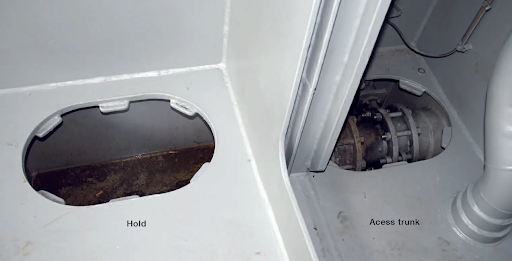
A bilge well is a recessed or sunken compartment located at the lowest point of the bilge in the engine room or machinery spaces. It is designed to collect liquids such as water, oil, sludge, and other residues that accumulate due to leakages, drainage, or operational processes onboard. Since fluids naturally flow to the lowest point due to gravity, the bilge well acts as a central collection sump, making it easier to remove accumulated liquids efficiently.
The bilge well serves several important purposes onboard a ship:
Without a bilge well, liquids would accumulate randomly across the engine room, increasing the risk of accidents and making maintenance difficult.
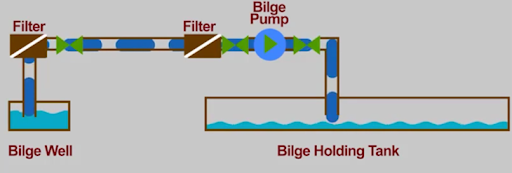
The operation of a bilge well is based on a simple principle gravity collection and controlled discharge.
This continuous process ensures that the engine room remains dry, safe, and operational.
A bilge well may appear simple, but it includes essential features for efficient operation:
Regular maintenance is essential to ensure proper functioning:
Neglecting maintenance can lead to clogging, pump failure, or inaccurate level readings.
|
Problem |
Cause |
Description |
Solution |
|
Blocked Strainer |
Accumulation of debris |
A blocked strainer occurs when dirt, sludge, rust particles, or oil residues collect inside the strainer over time. This restricts the flow of bilge water to the pump, reducing efficiency and sometimes causing complete loss of suction. |
Carry out regular cleaning and inspection of the strainer. Remove accumulated debris and check for corrosion or damage to ensure smooth system operation. |
|
High Bilge Level |
Leakage or pump failure |
A high bilge level indicates excessive accumulation of water in the bilge well. This may be caused by leakage from pipelines, machinery, or valves, or due to failure of the bilge pump. If ignored, it can create unsafe conditions in the engine room. |
Identify and rectify the source of leakage through proper inspection. Ensure that the bilge pump is operating correctly and repair or replace faulty components if required. |
|
Pump Not Taking Suction |
Air lock or blockage |
The pump may fail to take suction when air enters the suction line or when the line becomes blocked by sludge or debris. This prevents the pump from creating the required vacuum for pumping bilge water. |
Prime the pump and suction line properly to remove trapped air. Clean the suction line and inspect valves and pipelines for any blockage or obstruction. |
Modern ships must comply with strict pollution regulations. Bilge water cannot be discharged directly into the sea unless treated. The bilge well plays a key role in this process by:
Proper management of bilge wells helps prevent marine pollution and ensures compliance with international standards.
The bilge well may be a small component in the overall ship system, but its importance cannot be overstated. It is essential for drainage, safety, pollution control, and efficient engine room operation.
For marine engineers, maintaining the bilge well is not just a routine task, it is a responsibility that directly affects the safety of the vessel and the marine environment. A clean, properly functioning bilge well ensures smooth operations, early fault detection, and compliance with regulations.
In marine engineering, attention to such small yet vital systems is what defines a competent and responsible engineer.
Disclaimer :- The opinions expressed in this article belong solely to the author and may not necessarily reflect those of Merchant Navy Decoded. We cannot guarantee the accuracy of the information provided and disclaim any responsibility for it. Data and visuals used are sourced from publicly available information and may not be authenticated by any regulatory body. Reviews and comments appearing on our blogs represent the opinions of individuals and do not necessarily reflect the views of Merchant Navy Decoded. We are not responsible for any loss or damage resulting from reliance on these reviews or comments.
Reproduction, copying, sharing, or use of the article or images in any form is strictly prohibited without prior permission from both the author and Merchant Navy Decoded.
Decoded Discount Alert! up to 50% OFF
Use Coupon Code Deep50